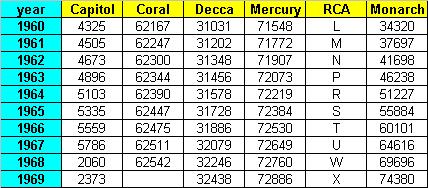
On this page I'll try and unravel some of the markings that appear within the "deadwax" or "run-out groove" sections on US 60's discs. These numbers and letters can reveal the date the disc was manufactured and/or mastered and by whom and where! This will be an on-going project, so all additional information is welcome. First up, here's a quick "rule of thumb" disc-dating grid covering five major labels and the infamous West Coast based Monarch pressing plant. Further breakdowns and explanations follow this grid:
Capitol Records
Found extensively on the Capitol, Tower and Uptown labels, the markings of the Capitol pressing plants are either of the following:
"Triangle": stamp in the dead wax containing I,A and M is for Scranton, Pennsylvania
"Starburst" or "Daisy stamp", which is basically an asterix looking shape, is their California pressing plants tag
"R": followed by a 3 or 4 digit number etched into the deadwax on some Uptown releases were pressed by Rainbo Record pressings
"O": stamped in the deadwax is for Jacksonville, Illinois.
"Hyphen and triangle": is for Winchester, Virginia.
Atlantic Records
As an example, Vala Reegan's "Fireman" has 45-6412 on the right hand side of the label, and 66C-10117 on the left. So does that make it a 64 or a 66 record? Atlantic simply used a mastering system that puts the last two digits of the year before the tape master number, thus 66C denotes a 1966 mastering for Vala's "Fireman". The master number is 10117 whilst the label number is 6412. The "45" is simply for the speed of the record. From January 1967 a pressing plant code was added to the master numbers:
AR: Allied Record Company - Los Angeles, California
BW: Bestway Products - Mountainside, New Jersey
CL: Columbia
CP or no code: Columbia - Pitman, New Jersey
CT / CTH: Columbia - Terra Haute, Indiana
LY: Shelley Products - Huntington Station, New York
MO: Monarch Records - Los Angeles, California
PL: Plastic Products - Memphis, Tennessee
PR: Presswell Company - Ancora, New Jersey
RI: PRC Recording Industry Products - Richmond, Indiana
SP: Specialty Records Corporation - Olyphant, Pennsylvania
WM:Midwest Record Pressings - Chicago, Illinois 
Columbia Records
Like RCA and Capitol, Columbia's pressing plants and mastering services were used an awful lot by smaller independent local labels. There were several pressing plants operating during the 1960s:
Bridgeport, Connecticut: 1920s through to 1964 - some pressings have a CLB, or a dot next to the deadwax matrix.
Hollywood, California: 1948 to 1963 - H/HH etched in runout.
Pitman, New Jersey: 1961 to 1988 - label codes inc. Atlantic "CP"; London "P", and Columbia "P" in the deadwax.
Santa Maria, California: 1963 to 1981 - label codes inc. Mercury/Polydor "25"; A&M "Z", and deadwax marks for Columbia backwards "S"; Atlantic "CS/CSM"; London "SM".
Terre Haute, Indiana: 1953 to 1982: label codes inc. A&M Records "Y/y"; Mercury/Polydor "73"; Atlantic "CT/CTH"; London "TH"; deadwax marking is a "T".
ZTSC - Chicago
ZTSB - Nashville
ZTSP - New York, and to a lesser degree Hollywood
The code itself is broken down thus:
Z - indicates a 7" medium
T - transcription
S - indicates 45rpm
C - Chicago, where they were pressed
The job numbers which follow the ZTSC, ZTSP, ZTSB codes were allotted out of the offices in the Fisher Building in Detroit, and were often allocated in batches. Columbia Special Products Detroit office was first located in the Fisher Building during the mid '60's. Orders taken by the office would then be sent to Columbia's Chicago studio to have the master lacquer (acetate) cut, which would then be forwarded on to the plant in Terre Haute. Stereo 45 matrix numbers from NY/Hollywood always bore a 'ZTS' prefix; Chicago used 'ZCSV' prior to 1969, and 'ZTSV' thereafter; Nashville's stereo matrix prefix was 'ZSSB.' EP releases bore the following prefix codes: ZTEP = New York/Hollywood; ZTEC = Chicago; ZTEB = Nashville. ('E' denoted an EP release.)
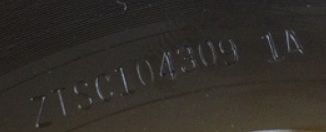
In addition to the prefix code and job number, there would also be a number/letter combination at the end - the number indicates the tap/mix used, whilst the letter refers to the lacquer used. Only the letters A to L were used, excluding I: A 1st cutting; B 2nd; C 3rd; D 4th; E 5th; F 6th; G 7th; H 8th; J 9th; K 10th; L 11th; AA 12th; AB 13th; AC 14th; AD 15h etc - note that lacquers were made at the same time to then be sent out to pressing plants - therefore lacquer A does not necessairly reflect the "first press" - it is possible to have "1A" on one side of a disc and "1D" on the flipside. The example pictured ZTSC104309 1A illustrates that the recording was most likely pressed in Chicago, that the first recording/mix was used and that it was the pressed from the first lacquer.
From 1971 to near the end of that decade, Columbia also owned and operated a studio in San Francisco, however, no custom codes were used there. Chicago, Nashville, New York and Hollywood were only venues of recording studios operated at one time or another by Columbia - in terms of their pressing, besides Pitman (opened 1960, ceased pressing vinyl records in 1986) and Terre Haute (opened 1953, closed 1982 then converted to CD manufacture) they had another plant in Santa Maria, California (opened 1963-64, closed 1981). Prior to 1964, Columbia also operated an East Coast plant in Bridgeport, Connecticut, and another West Coast factory in Hollywood which was NOT where their studios were there. A company called, Customatrix was a division of Columbia's pressing operations that handled the making of metal parts (i.e. mothers, stampers) for such pressings by Columbia.
RCA-Victor Records
Every disc on the RCA label, it's subsidiaries, and indeed the myriad of independent labels which utilised it's mighty mastering and pressing facilities, feature a letters and numbers. During the mid-60's they had four recording hubs of New York, Chicago, Hollywood or Nashville. Their codes can be broken down thus:
As an example I'll use the code "634P-0987". The '634P' is the account number of the client, or the info for the company / person who initialised the account. It has nothing to do with arriving at a release date. The second number '0987' is simply the master number referencing the tape used to make the master.
The other part of the code that is included on independent labels pressed by RCA, as well as the major label itself, is the code which reads as, -e.g. "TK4M-0987". Once again, the second set of numbers refer to the master tape reference number, but the first part of the FOUR DIGIT CODE tells us the following:
THE YEAR:
Noted by the first letter - see below.
THE FORMAT:
K = 45rpm if there was an L = 7" 33 1/3 rpm; R = 12" 33 1/3 rpm; P = 10" 33 1/3 rpm
(An EP actually retained the 'K' in the third position, while 'B' in the fourth position was mono and 'A' was stereo.)
THE TYPE OF ACCOUNT:
A '4' = Custom - re-recorded from client's furnished tapes -i.e. the client recorded at their own venues, then took the tapes to any of the RCA studios which then cut the lacquers.
A '5' = Custom job whereby the lacquer was furnished to RCA -i.e. cut at a non-RCA studio.
RECORDING TYPE:
"M" denotes mono, "S" would denote stereo.
In the example TK4M-0987, the "T" denotes a 1966 year of mastering and not always the actual year of release, but it usually is accurate 95% of the time and is a useful rule of thumb. The RCA year codes are thus -
L - 1960 / M - 1961 / N - 1962 / P - 1963 / R - 1964 / S - 1965 / T - 1966 / U - 1967 / W - 1968 / X - 1969
Z - 1970 / A - 1971 / B - 1972 / C - 1973 / D - 1974
One can then pin-point the disc further, as if the account number, in this case "4", falls BEFORE the "K", then the disc was mastered between January and June of 1966. If the number is after the "K", as in our example TK4M, then it was mastered between July and December, 1966.
In addition to the above, most independent label releases also have a letter stamped into the dead wax which indicates which plant was used:
R - Rockaway, New Jersey 1947-1976.
I - Indianapolis, Indiana, (50 miles Northeast of Bloomington at 7900 Rockville Road) 1939-1987.
H - Hollywood, California 1947-1976.
Finally, during 1966, their Chicago studios were apparently so busy that their last set of numbers put the number (3/4/5) in the first position and the year in the second (4TKM!). And as to the period up to 1962, the second position was 7, 8 or 9 (indications same as 3, 4 or 5, respectively, post-1963), 'O' was their code for "Phonograph," and 'W' denoted a 7", 45 RPM release. (i.e. L7OW, M9OW or NO8W).
Monarch Pressing Plant Disc Dating
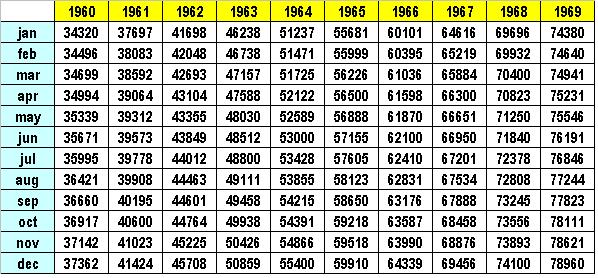
Monarch was one of the major manufacturing / mastering plants based in Los Angeles on the West Coast of the US. It's possible to date their work to the month and year of release via the "Delta number" - see the grid below.
Each disc has their "MR" within a circle in the deadwax, and then a "Delta number", which consists of a scratched in triangle shape followed by a 5 digit number. It appears on both sides of a disc with an "X" added for the B.side. Note that the Delta/triangle system was not exclusive to Monarch, and other companies such as ALCO ( see below) also utilised it indicating that they produced the metal masters for pressing from. Record labels may use one company to produce the masters and another to actually press the discs - Monarch had the capability to manufacture discs. It is also worth noting that another metalwork company, AFM Engineering could also press records, but they used vinyl whereas Monarch produced styrene discs (injection moulded) rather than 'pressed/stamped' out vinyl.
An awful lot of their presses utilised styrene rather than vinyl, which continued on into the 1970's - note there were plenty of Northern Soul second issues manufactured by Monarch, which tend to have numbers starting with 8, 9 or 10, instead of earlier original release, if indeed they were 60's recordings.
Please note the Monarch numbers stated below are guidelines and based on mid-month releases, so numbers either side may fall between months. These numbers were based mainly around the Dot label and put together by Warren Cook for the "Record Exchanger, vol.2. iss.4. in March 1972.
Plastic Products - Memphis
Atlantic singles pressed by the plant used a "PL" suffix after each matrix number on the record label to identify the origin thereof. In addition, they pressed for Sun Records during its 1950's heyday.
Precision - Nashville, Tennessee
Noted by a "PRP" prefix, the Precision Record Press out of Nashville also used Nashville Matrix for plating purposes. Their account number "161" and the Nashville Matrix logo are found in the deadwax, along with a 3, 4 or 5 digit master number, which is usually also on the record label.
The last digit is either a "1" or "2" designated the proper "side' of the disc. The PRP code started during December 1967, replacing their previous code, "ZAFX", which has no connection to Columbia CBS affiliated pressings, please note.
QCA - Cincinnati, Ohio
Queen City Albums operated in Cincinnati, Ohio, and their mastering codes are fairly easy to date, - i.e. "QCA 91234" - the first digit 9 refers to the year 1969, the 12 is the month December. The last set of numbers does not refer to the day, but signifies the number of jobs completed to that point, in this case 112 mastering pressings were done in April of 1966, at that point in time. The codes change slightly for the 1970's, - i.e. "QCA 305322" reads as 1973 and the next two digits 05 signify the month of May.
Rainbo Pressings - Santa Monica
An "R" code on the label and sometimes a "R" stamped into the dead wax. This company is still in production.
Recordings Inc. - Baltimore
Noted by an "RI" followed by a four digit number either on the label or in the dead wax -ie RuJac label.
Rite Sound - Cincinnatti, Ohio
So many small labels used their services yet none of them seemed to ever have a hit! Recognisable from the either a machine stanped or hand-etched "RITE" in the deadwax, and often a dip in the vinyl/label.
Sheldon - Chicago
Their name is often mistaken as Shelton due to the italic script they used. Records that were mastered / plated by "Sheldon" bear the stamp. If Sheldon pressed the record, then there will be a three or four digit matrix number that can appear on the label, but is always found in the dead wax (S 4355).
Shelley Products Ltd - Huntingdon Station, N.Y.
They pressed for many East Coast major labels such as Liberty, Imperial and World Pacific, alongside cult independent ones, such as the Red Bird family and the infamous Shrine label. Their "X" mark is raised rather than etched into the styrene pressings they used, and often the actual record labels seem to come adrift from the discs due to poor quality adhesives used...this improved post-67. During 1969, the "X" was replaced with a backwards "S" within a circle. This company also owned the Golden Crest label.
Sonic Recording Products - Long Island, N.Y.
1950 - changed its name to Goldisc Recording Products in 1975. Identified by "SOL" or "SON" hand-etched in the dead wax (mostly post-1970).
The Sound Of Nashville - Nashville
Recognisable from the "SoN" prefix on the label.
Southern Plastics / United Record Pressing - Nashville
Dating back to 1949 and originally based at 512 Franklin Street, they relocated to #453 Chestnut Street, next door to Matrix of Nashville and changed their name to United Record Pressing Inc. during 1971...they are still in operation! Their "SO" codes began during the early 1960's and are sometimes noted on the label, but always in the dead wax, followed by a 3 or 4 digit number. However, in some cases the "SO" code does not appear in either location, and you'll then find a number "5" and a "Nashville Matrix" script code in the dead wax.
Specialty Records Corp. - Olyphant, Pennsylvania
Started in 1946, pressed for Atlantic/Atco for many years, and whose pressings were identified by an uppercase "S" with a small "R" inside the top half of the letter, and a small 'C' inside the bottom half, which was backwards before 1972 and forwards thereafter, stamped on the dead wax.
Stereo Sound - Chicago
This plant operated out of Chicago and was started by a former employee of the Chess label family group. A "SS" is always found as a prefix followed by a four digit number, i.e. SS 4622-01A, The 4622 is the master number which yields a date, and the 01A suffix refers to the side designation of the song. The SS refers to the fact that the song was recorded "in house" at their studio. A second code using the letter "M" refers to outside recordings brought in for mastering and pressing. Those codes read, -i.e. 7701-01M. The "M" replaces the A or B designation used in the SS code. Some discs may omit the M letter or the SS code (there was no consideration to the fact that somebody would want to know these intricacies 35 years later), thus the identifier to cite a Stereo Sound press is the suffix 01A, or 01B which always follows the master number in the dead wax.
Superior Plastics Company - New Orleans
This was Dover Distribution's pressing plant based at 340 Brooklyn Avenue. The offices for the record company, studios, pressing plant, and distribution company were all at 748 Camp Street. Dover was the label distribution arm that handled labels such as Manhattan, U-Doe, Busy-B, White Cliff, Hot Line, Apollo etc. The recording studio was known as, 'Cosimo', named after the New Orleans record kingpin who owned it, Cosimo Mattasa. Dover discs were often mastered and plated by Nashville Matrix, noted by the script stamp logo in the dead wax, and the number "86", indicating a Dover based account, followed by a four digit number.
SJW - Wakefield Pressings - Phoenix
Recognisable from the "SJW" prefix on the label and dateable mastering numbers.
Ter-Mar Mastering - Chicago
Recognisable from the "TM" prefix on the label - based at the Chess label studios.
H.V. Waddell Co. - Burbank, California
Featued a "W" stamped in the dead-wax, and a "W" at the end of the label matrix for London records. Closed in the mid-80's.
Mercury Label Family
For the entire listing of release dates and/or mastering completion dates, may I suggest you buy the book called simply, "The Mercury Labels" published by Greenwood Press. It is a five book series with volume three concentrating on lists, by master number, for every Mercury/Smash/Philips plus subsidiaries like Limelight, Blue Rock and so on, from the years 1964 through to 1969. They usually have a"MR" scrathced into the deadwax.
Label Printing Companies
Bert-Co Press.
Hollywood-based printing concern that provided label copy artwork for many West Coast labels and/or pressing plants from the 1950's up to the '70's.
Co-Service Printing Co., Newark, N.J.
Provided label copy artwork for countless indie labels up to c. 1963; thereafter, printed paper labels exclusively for Bestway Products (and, by extension, their clients).
Keystone Printed Specialties, Inc., Scranton, PA.
Supplied most of the label copy artwork for Capitol's Scranton plant right up to the early 1970's, as well as for Specialty Records Corp. of Olyphant, PA (which pressed for Atlantic-Atco for many years, and whose pressings were identified by a big 'S' with a small 'R' inside the top half of the letter, and a small 'C' inside the bottom half, which was backwards before 1972 and forwards thereafter, stamped on the dead wax).
MacMurray Press, New York, N.Y.
Several RCA Custom clients from c.1955-65 had their label copy artwork handled by this concern.
Progressive Label Co., Brooklyn, N.Y.
Another firm that did label copy artwork jobs for many indie labels over the years. Clients included Roulette (1957-61), Diamond (of Johnny Thunder "Loop De Loop" fame), and ABC-Dunhill (1969-71).
Queens Litho / Kaltman Press, Queens, N.Y.
Provided label copy artwork (and in many cases, label design) for countless East Coast-based independent labels from the late '40's to the late '60's (let me qualify that: Queens Litho's providing of label copy artwork ended in late 1968, though they handled packaging for the industry for many years thereafter).
Independent Record Plants -inc. mastering, stamping and metal part manufacturing
Allentown Record Co. Inc. - Pennsylvania
1947-1982 featured "ARC" stamped in the dead-wax. Mainly albums.
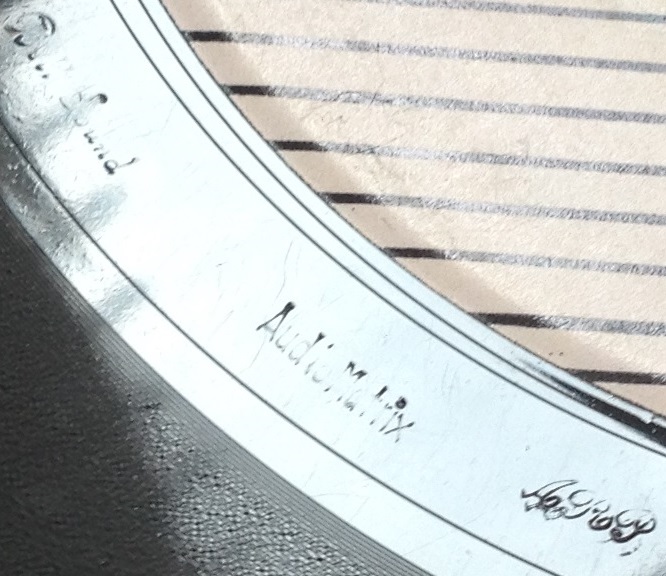
Audio Matrix, Inc. - Bronx, New York
People would send their lacquers aka acetates to them and they would prepare the metal parts necessary to manufacture records, icluding masters, mothers and stampers. Their work always had a machine stamped "Audio Matrix" in the deadwax more often than not almost unreadable as stampers wear leading to the depth of the actual stamp getting more shallow.
Allied Record Co. - Hollywood
1962 to 1996 (bought by WEA in 1979). Used injection moulding styrene and featured a hand-etched "X" followed by a four-digit number in the 1960's - discs from the early-to-mid 1970's used 'K'.
ALCO - Los Angeles
1942-1987. ALCO was located on the north west corner of Santa Monica Blvd and El Centro in Hollywood, almost diagonally across from Gold Star, located almost on the south east corner of Santa Monica and Vine. Primarily a record pressing plant with 24 manual presses for vinyl. A delta sign in the dead wax does not always lead to Monarch, as other mastering/metalwork producers shared the delta system -i.e. ALCO did the metalwork for Doré, but AFM Engineering (vinyl), an associated company, did the pressing. Sometimes, as in the case of Monarch, a company did both. Alco mastered discs have a machine stamped logo with stylised "A, L and C all within a circle".
A delta number also does not necessarily mean that a record was pressed on the West Coast - ALCO did their mastering from West Coast studio lacquers (e.g. Gold Star, Capitol, Western Recorders & Radio Recorders) and produced the metalwork for the pressing houses - these could be sent to both West Coast (AFM Engineering) and East Coast (Long Island Stamper Co. in Long Island, NY), who in turn produced stampers for pressing houses in the New York and Philadelphia areas.
American Record Pressing Co. - Michigan
1952-1972 and based in Owosso in Michigan - closed due to a fire, their presses had the infamous "ARP" initials stamped in italics, and an "AM" label matrix for Atlantic label.
Artisan Sound Recorders - Pasadena, LA.
A mastering service started during the mid-60's - their machine stamp is a capital "A" with two circles eminating from the top: It sometimes appears as an oval with what appears to be two drumsticks sticking in it.
Audio Manufacturing Record Co. - Lakewood, NJ.
Pressed records for their own children's labels, but also for London Records, Bell Records (later becoming Arista Records and Time Life). The plant opened in '68 and closed in '89.
Bell Sound - New York
A fairly large operation operating out of 237 W 54th Street, NYC, that stamped in "Bell Sound" in an italic script on many independent records.
Bestway Products - Mountainside, New Jersey
A pioneer in the making of styrene records, they pressed for such labels as Bell, Yew, Scepter, Dimension and Perception/Today. Some of their labels were printed directly on the record itself (no paper label). Identified either by a stamped "B" or "Bestway" in the deadwax, or later an "S" in a "spade shape".
Cook Labs - Stamford, Connecticut
Look for a "CO" on the label, followed by a three or four digit number.
Criteria - Miami
Criteria was probably Miami's busiest studio, and all kinds of music was recorded and mastered there, including garage, soul, funk, lots of Latin music and all kinds of easy listening and lounge sounds. Jack Davis was their chief engineer and did most of the mastering there through '69...finding a scratched in "JD" (with the two letters joing on a single upright line) in the dead wax indicates his work. During '69 the "JD" symbol was replaced with different initials -- usually "CTW" (Charles T. Wright) or "ME" (studio owner Mack Emmerman). Fortunately the numerical code stayed consistent, so records mastered at Criteria can still be dated using the code.
Decca - Gloversville & Pinkneyville
The Gloversville factory opened in 1953, and Pinkneyville in 1958 - both changed to MCA Pressing Plant in 1966. Gloversville used an "arrow" or "four-leaf clover" designs after the label matrix on the b.side.rage, whilst Pinkneyville a solid "Triangle".
Houston Recorders - Houston
Recognisable from the "LH" prefix on the label.
Long Wear Stamper Company - New York City
An "LW" followed by a number found on the label, or if absent, always in the deadwax (etched)...still active today.
M.S.I. Co, - Philadelphia
This company is infamous for the raised machine-stamp matrix with the backwards "M.S.I.CO" under the label...it is the one found on Sandbag Records for the Epitome Of Sound's classic, 'You Don't Love Me'.
Midwest Record Pressing Inc. - Chicago, Illinois
A "MW" followed by a three or four digit number sometimes on the label, always in etched in the deadwax.
Matrix Of Nashville - Nashville
Based at 457 Chestnut Street, next door to Southern Plasctics (later URP) at #453. this company made metal parts for the local pressing plants - their work bears the stamped in italic, "Nashville Matrix" wording, sometimes confused as saying "Nashville Mains", due to a worn out stamper.
Nashville Record Productions Inc. - Nashville
The largest of the Nashville based mastering services, their client base included many famous labels: Motown (10), Hit (15), SSS (113), Monument (125), Paula (127), Dover (86), SO (5), PRP (161) SON (18) and small independant Detroit labels often had either 77 or 95. They used Matrix of Nashville stampers, so the "Nashville Matrix" stamp is also to be found in the deadwax.
Kaybank - Minneapolis
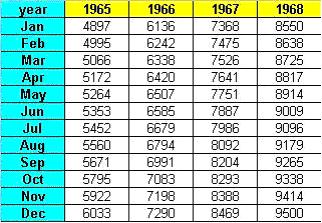
Found hand-etched in the dead wax; almost always printed on the very bottom half of the label, this prolific plant located in Minneapolis, MN pressed many upper mid-west 45's, and a large amount of 45's recorded in the Carolinas. Starting in December, 1964, Kaybank began prefixing their numeric code with the number pertaining to the calendar year pressed (4=1964, 5=1965, etc.). Sight reading this number will yield the release year, but compare the remaining four digit # to approximate the month. Below is Mike Markesich's original grid which he has pieced together recently and I thank him for allowing me to share it with you...well done Mike, and keep up the good work!o add text.

US Pressing Plants
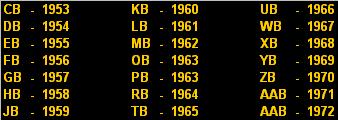
The Scranton triangle is located on the label and machine stamped in the deadwax, as a two digit letter prefix, followed by a series master number of usually 3 or 4 digits. The first letter prefix code indicates the year of release the second, B, is constant, though note the letters "S" and "V" were not used in this coding system, and stereo masters had an "S" added on (i.e. SYB, SAAB):